






Fueling India's Growth: A Look at How BPCL Fuel Distribution Works
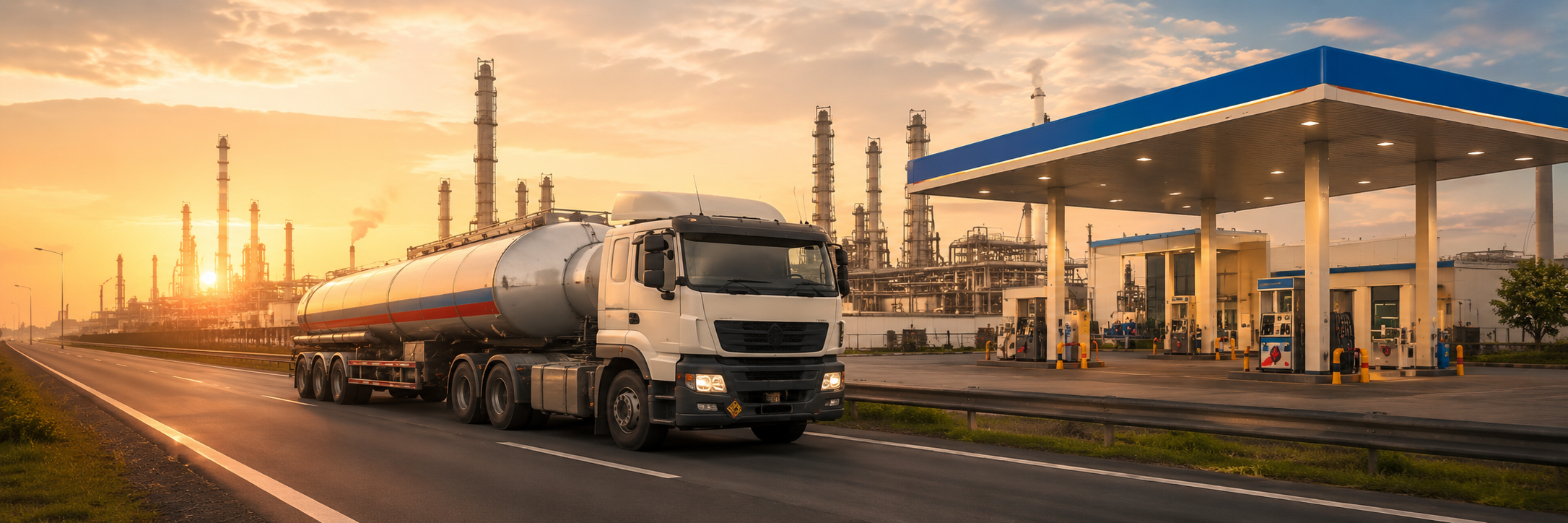
Quick Answer: BPCL's fuel distribution network moves petroleum from refineries through depots and terminals to retail outlets such as Vikas Filling Station. Each stage involves quality checks, logistics planning, and regulatory compliance, ensuring businesses and consumers across India receive a steady, dependable fuel supply that supports transportation, industry, and economic growth.
India's economy runs on movement. Trucks carry goods between states, tractors prepare fields for the next harvest, and factories keep machines running through the day. None of this happens without a steady supply of fuel reaching the right place at the right time. Behind every full tank at a retail outlet lies a distribution system that few people think about, yet one that touches almost every part of daily life.
Bharat Petroleum Corporation Limited, widely known as BPCL, operates one of India's largest fuel distribution networks. Understanding how this network functions, from refinery to retail pump, offers useful insight into how the country's energy infrastructure supports its growing economy. Vikas Filling Station, a BPCL retail outlet, serves as a practical example of how this large-scale system reaches everyday customers.
How Does BPCL Fuel Distribution Work?
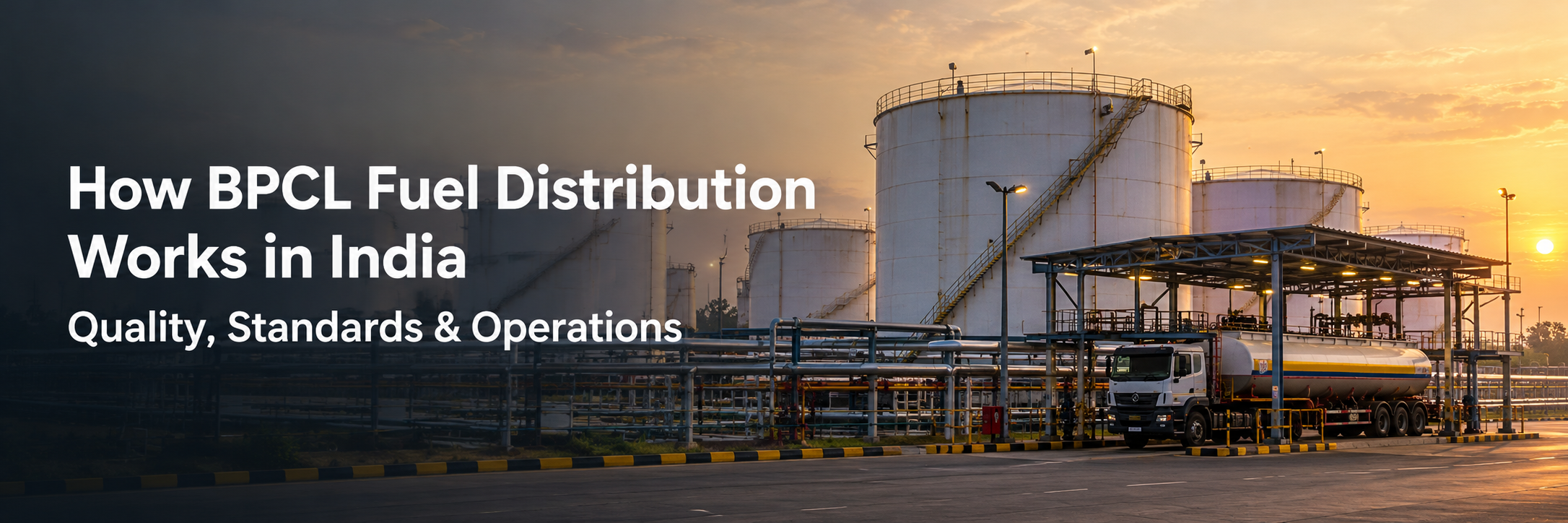
BPCL fuel distribution follows a structured path that starts at refineries and ends at retail outlets across the country. Crude oil is refined into petrol, diesel, and other petroleum products, which then move through pipelines, railway tankers, and road transport to regional depots and terminals. From these storage points, fuel is dispatched to authorized retail outlets, where it becomes available to consumers, transporters, and local businesses.
This process depends on coordinated logistics planning. Oil marketing companies track demand patterns across regions, schedule deliveries, and maintain buffer stock at depots to prevent shortages. Each step in the chain is designed to keep fuel moving efficiently while meeting safety and quality requirements set by regulatory authorities.
| Stage | Description | Purpose |
|---|---|---|
| Refining | Crude oil is processed into petrol, diesel, and other fuels | Produces usable petroleum products |
| Primary Transportation | Fuel moves from refineries to depots via pipelines, rail, or coastal shipping | Bulk movement over long distances |
| Storage at Depots | Fuel is stored at regional depots and terminals | Maintains buffer stock for steady supply |
| Secondary Transportation | Tankers carry fuel from depots to retail outlets | Last-mile delivery to local markets |
| Retail Dispensing | Fuel is sold to consumers at outlets like Vikas Filling Station | Direct access for vehicles and businesses |
Why Is Reliable Fuel Distribution Important for India's Economy?
Fuel distribution is not just an industrial process. It directly supports the movement of goods, people, and services across the country. Transportation companies depend on predictable fuel availability to plan delivery schedules. Farmers rely on diesel for tractors and irrigation pumps during critical planting and harvest periods. Manufacturers need uninterrupted fuel supply to run generators and machinery, particularly in areas where power supply can be inconsistent.
When fuel distribution runs smoothly, it reduces operational uncertainty for businesses of every size. A delay in fuel supply, even for a short period, can disrupt logistics chains, raise transportation costs, and slow down production schedules. This is why oil marketing companies invest heavily in distribution infrastructure, from pipelines to retail networks, to keep supply consistent across urban and rural regions alike.
How Fuel Travels from Refinery to Retail Outlet
The journey of fuel from refinery to retail outlet involves several transportation modes working together. Pipelines handle the bulk movement of fuel over long distances efficiently and safely. Where pipelines are not available, railway tankers and coastal shipping routes carry fuel to regional depots. From these depots, road tankers complete the final leg of the journey, delivering fuel directly to retail outlets.
This multi-mode transportation system allows oil marketing companies to reach both metro cities and smaller towns. Depot locations are strategically chosen based on regional demand, proximity to transportation routes, and storage capacity requirements. The goal is to minimize transit time while maintaining fuel quality throughout the journey.
What Role Does Vikas Filling Station Play in BPCL's Distribution Network?
Vikas Filling Station functions as a retail link in BPCL's broader distribution network. As an authorized outlet, it receives fuel that has already passed through depot-level quality checks and quantity verification. The station's responsibility includes maintaining proper storage conditions, conducting routine quality checks on received stock, and ensuring accurate dispensing to customers.
Retail outlets like Vikas Filling Station also serve as the point where regulatory compliance becomes visible to the public. Calibrated dispensing units, proper documentation, and adherence to safety protocols are standard practices expected at every authorized outlet. This local-level diligence is what allows large-scale distribution networks to maintain consistency at the point of sale.
Outlets of this kind also play a quieter role in regional economic activity. Transport operators, local businesses, and individual vehicle owners depend on these stations for daily fuel needs, making them an essential part of the logistics ecosystem that keeps goods and people moving.
How Is Fuel Quality Maintained Before It Reaches Customers?
Fuel quality assurance is a continuous process that begins at the refinery and continues through every stage of distribution. Before fuel leaves a depot, it undergoes density testing, contamination checks, and sample analysis to confirm it meets prescribed standards. Tankers transporting fuel are sealed to prevent tampering during transit, and seals are verified upon arrival at retail outlets.
At the retail level, outlets are expected to conduct their own checks, including density tests and water contamination tests, before accepting new stock. Dispensing equipment is also calibrated periodically to ensure customers receive accurate quantities. These layered checks help maintain trust in the fuel supply chain, from depot to pump.
| Quality Test | Purpose | Benefit |
|---|---|---|
| Density Test | Confirms fuel meets prescribed specifications | Ensures product consistency |
| Water Contamination Check | Detects presence of water in fuel | Prevents engine and equipment damage |
| Seal Verification | Confirms tanker has not been tampered with during transit | Maintains supply chain integrity |
| Quantity Verification | Checks dispensed volume against calibrated standards | Protects consumer trust |
| Sample Testing | Periodic laboratory analysis of fuel samples | Confirms long-term compliance with standards |
How Does Reliable Fuel Supply Support Local Industries?
Local industries depend on fuel availability for far more than vehicle movement. Transport and logistics companies need diesel to keep delivery fleets running on schedule. Agricultural operations rely on fuel for tractors, harvesters, and irrigation systems during time-sensitive farming seasons. Manufacturing units often use diesel generators as backup power sources, especially in regions with variable electricity supply.
A steady fuel supply chain reduces operational risk for these industries. Businesses can plan production and delivery schedules with confidence when fuel availability is predictable. This reliability, built on efficient depot management and well-distributed retail networks, contributes directly to smoother business operations and reduced downtime across multiple sectors.
| Industry | Fuel Requirement | Business Impact |
|---|---|---|
| Transportation & Logistics | Diesel for trucks, fleet vehicles | Timely delivery, reduced transit delays |
| Agriculture | Diesel for tractors, pumps, harvesters | Supports planting and harvest schedules |
| Manufacturing | Diesel for backup generators, machinery | Reduces production downtime |
| Construction | Diesel for heavy equipment | Keeps project timelines on track |
| Commercial Mobility | Petrol and diesel for commercial vehicles | Supports passenger and goods transport |
BPCL's Contribution to India's Energy Infrastructure
As one of the country's leading oil marketing companies, BPCL contributes to India's broader energy infrastructure through its network of refineries, pipelines, depots, and retail outlets. This infrastructure supports not only fuel distribution but also employment, regional development, and energy security for the country.
Oil marketing companies operating under government oversight follow standards set by bodies such as the Petroleum and Natural Gas Regulatory Board, which governs aspects of fuel marketing and distribution infrastructure. This regulatory framework helps maintain consistency and accountability across the industry, regardless of which company operates a given retail outlet.
Fuel Distribution and Economic Growth
Energy access and economic growth are closely linked. Reliable fuel distribution supports the transportation networks that move raw materials to factories and finished goods to markets. It enables agricultural productivity by powering equipment during critical growing seasons. It also supports small businesses, from local transporters to retail shops, that depend on consistent mobility and power access.
As India's economy continues to expand, demand for fuel across transportation, industrial, and agricultural sectors is expected to grow alongside it. Efficient distribution networks, built on strong logistics planning and quality assurance practices, will remain essential to supporting this growth without disruption.
Industry Insights
Fuel distribution is a logistics-intensive industry that requires constant coordination between supply forecasting, transportation scheduling, and inventory management. Depots maintain buffer stock based on regional consumption patterns, adjusting supply levels during peak demand periods such as harvest season or festival travel. Retail outlets, in turn, manage their own inventory to avoid both shortages and overstocking.
Technology has become an increasingly important part of this process. Inventory tracking systems help oil marketing companies monitor stock levels in real time, while logistics software assists in route planning for tanker deliveries. These tools help reduce delays and improve the overall efficiency of the supply chain, from depot dispatch to retail delivery.
- Depot-level forecasting helps anticipate regional demand fluctuations.
- Tanker route optimization reduces delivery time and fuel wastage during transport.
- Retail outlets coordinate with depots to schedule timely replenishment.
- Quality checks at multiple stages reduce the risk of contamination or measurement errors.
Future of Fuel Distribution in India
The fuel distribution sector in India is gradually adopting more advanced tracking and inventory management tools to improve efficiency. Digital monitoring of tanker movements, automated stock alerts at depots, and data-driven demand forecasting are becoming more common across the industry. These developments aim to reduce delivery delays and improve supply consistency, particularly in regions with growing industrial and agricultural activity.
As infrastructure projects expand and transportation networks improve, fuel distribution systems are likely to become more responsive to regional demand patterns. This evolution supports the broader goal of maintaining dependable energy access as India's economy continues to grow.
Conclusion - BPCL Fuel Distribution
Fuel distribution may operate quietly in the background, but its impact on daily economic activity is significant. From refinery to retail outlet, each stage of BPCL's distribution network involves careful logistics planning and quality assurance to ensure fuel reaches businesses and consumers reliably. Outlets like Vikas Filling Station represent the final, visible link in this chain, connecting large-scale petroleum infrastructure to everyday users. As India's transportation, agricultural, and industrial sectors continue to grow, dependable fuel distribution will remain a foundational part of supporting that progress.
Related Industry Resources
- Fuel Distribution in India
- How BPCL Supports India's Energy Sector
- Petroleum Supply Chain Explained
- Retail Fuel Stations in India
- Industrial Fuel Supply
- Future of India's Energy Infrastructure
FAQ
1. How does BPCL distribute fuel across India?
BPCL moves fuel from refineries to depots and terminals through pipelines, railway tankers, and road transport, finally reaching retail outlets that supply consumers and businesses.
2. What is Vikas Filling Station's role in the BPCL network?
Vikas Filling Station operates as a BPCL retail outlet, receiving quality-checked fuel from BPCL depots and dispensing it to local vehicles, transporters, and businesses.
3. How is fuel quality checked before reaching consumers?
Fuel undergoes density tests, water contamination checks, quantity verification, and sample testing at multiple stages, including depot dispatch and retail outlet delivery.
4. Why is reliable fuel distribution important for India's economy?
Consistent fuel supply keeps transportation, manufacturing, agriculture, and commercial activity running smoothly, directly supporting economic growth and business continuity.
5. What types of fuel does BPCL distribute?
BPCL distributes petrol, diesel, and other petroleum products to retail outlets, industrial units, and bulk consumers across India.
6. How does fuel reach remote or rural areas in India?
Oil marketing companies rely on a network of depots, terminals, and authorized retail outlets to extend fuel availability into smaller towns and rural regions.
7. Who regulates fuel quality standards in India?
The Petroleum and Natural Gas Regulatory Board, along with government oversight, sets standards that oil marketing companies like BPCL must follow.
8. How does fuel distribution support local businesses?
Industries such as transport, agriculture, and manufacturing depend on steady fuel access for daily operations, equipment running, and logistics movement.
9. What technology helps maintain fuel supply reliability?
Inventory management systems, automated tracking, and logistics planning tools help oil marketing companies forecast demand and avoid supply disruptions.
10. What is the future of fuel distribution in India?
The sector is expected to see greater use of digital tracking, improved logistics infrastructure, and continued expansion of retail networks to meet rising energy demand.