

Mini Truck vs Pickup: Which Commercial Vehicle Is Right for Your Business?
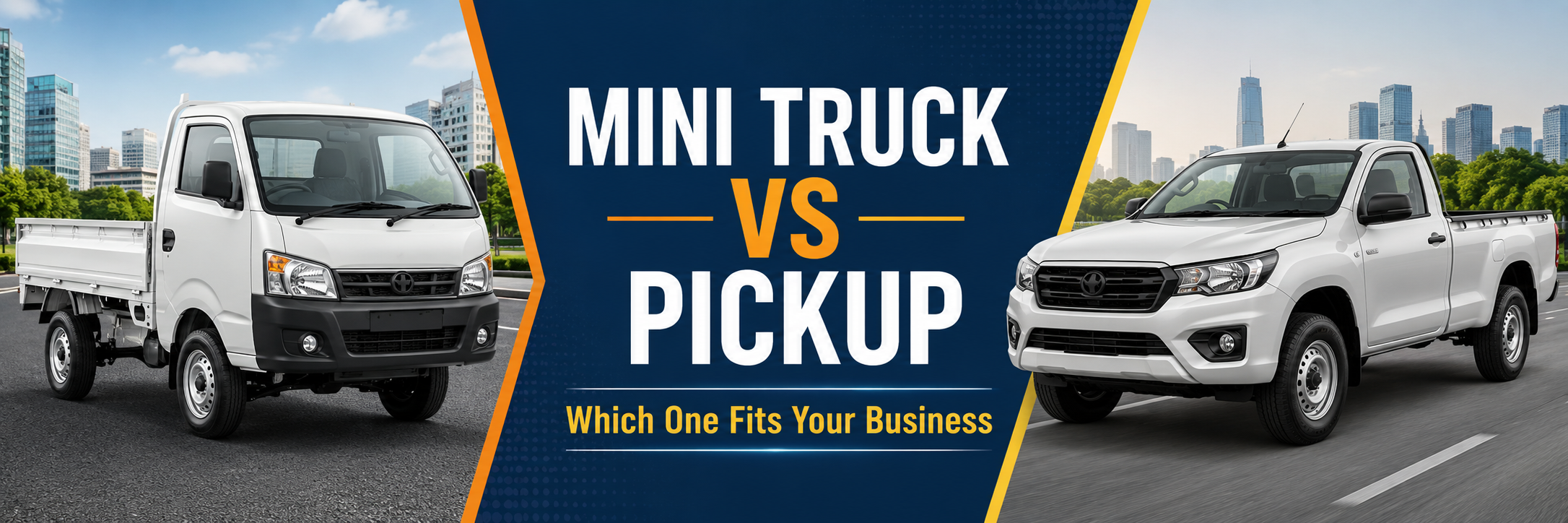
Quick Answer: A mini truck is a compact goods carrier suited to short-distance urban deliveries and tight spaces, while a pickup typically offers a different cargo configuration and payload profile suited to mixed or longer routes. Choose based on load type, trip distance, and daily operating conditions rather than size alone.
What Is the Difference Between a Mini Truck and a Pickup?
The core difference lies in size, cargo configuration, and typical use case. A mini truck is usually smaller, easier to manoeuvre, and built for frequent short trips carrying light to moderate loads. A pickup generally has a different chassis and bed layout, and depending on the model, may offer a different payload and durability profile suited to varied road conditions.
Both fall under the broader category of light commercial vehicles used across India for goods transportation, but the way they are used on the ground can differ significantly based on business needs.
What Is a Commercial Vehicle?
A commercial vehicle is any vehicle used primarily for business purposes rather than personal use, including the transport of goods, materials, or services. In India, commercial vehicles are registered separately from private vehicles and are regulated under guidelines set by the Ministry of Road Transport and Highways and enforced through Regional Transport Offices.
Mini trucks and pickups both belong to the light commercial vehicle segment, which plays a central role in last-mile delivery, local distribution, and small business logistics across the country.
What Is a Mini Truck?
A mini truck is a small, compact goods carrier typically used for short-distance transportation within cities and towns. It is designed with manoeuvrability in mind, allowing drivers to navigate narrow lanes, congested markets, and residential areas with relative ease.
Mini trucks are commonly used by grocery distributors, small retailers, courier services, and local manufacturers who need to make frequent trips carrying moderate loads. Cargo body types can include open decks, closed containers, and specialised configurations depending on the manufacturer and model.
What Is a Pickup Truck?
A pickup truck generally has a longer wheelbase and a different cargo bed structure compared to a mini truck. Depending on the model, pickups can offer a different payload capacity and are often used where businesses need to carry bulkier goods or travel across a mix of urban and rural roads.
Pickups are used across sectors such as construction, agriculture, hardware supply, and intercity goods movement, though the exact suitability depends on the specific model chosen.
Types of Businesses That Use Mini Trucks
Mini trucks are widely used by businesses that prioritise frequent trips and easy access to congested areas. Common examples include:
- Grocery and FMCG distribution within cities
- Local retail supply and last-mile delivery
- E-commerce delivery in dense urban neighbourhoods
- Dairy distribution requiring multiple daily stops
- Small manufacturing units moving components locally
- Furniture and hardware delivery within city limits
Types of Businesses That Use Pickup Trucks
Pickups tend to suit businesses that need a different cargo profile or operate across mixed terrain. Examples include:
- Construction material movement to and from sites
- Agricultural transportation of produce and supplies
- Intercity or semi-rural goods transportation
- Wholesale distribution covering wider geographic areas
- Businesses carrying bulkier or irregularly shaped cargo
These are general patterns rather than fixed rules. Many businesses use either vehicle type successfully depending on the specific model and how it is configured.
Mini Truck vs Pickup: Payload Capacity
Payload capacity refers to the maximum weight a vehicle can safely carry, calculated as the difference between Gross Vehicle Weight and kerb weight. Mini trucks are generally positioned for light to moderate payloads, while pickups can, depending on the model, offer a different payload range suited to heavier or bulkier cargo.
Because payload figures vary widely between manufacturers and specific models, businesses should always check the exact payload rating of the vehicle under consideration rather than relying on general assumptions about the vehicle category.
| Factor | Mini Truck | Pickup |
|---|---|---|
| Typical Use | Short-distance urban delivery | Mixed urban and rural transport |
| Payload | Generally light to moderate, varies by model | Can be higher depending on model and variant |
| Cargo Area | Compact, open or closed body options | Larger bed area in many configurations |
| Manoeuvrability | Generally easier in narrow lanes and congested areas | Requires more space to manoeuvre in tight areas |
| Fuel Economy | Often favourable for city stop-start driving, model dependent | Varies by engine size and load, model dependent |
| Purchase Cost | Generally lower entry cost, varies by model | Can be higher depending on specification |
| Maintenance | Often simpler mechanical systems | Depends on engine and drivetrain complexity |
| Road Suitability | Best suited to city and paved roads | Often better suited to mixed or rougher terrain, model dependent |
| Driver Comfort | Compact cabin, varies by model | Often larger cabin space, varies by model |
| Business Applications | Retail, FMCG, e-commerce, dairy, local delivery | Construction, agriculture, wholesale, intercity transport |
Mini Truck vs Pickup: Cargo Space
Cargo space differs based on body type rather than vehicle category alone. Mini trucks often come with compact deck sizes suited to boxes, crates, and moderate volumes of goods. Pickups may offer a longer or wider bed in certain configurations, which can help when transporting bulkier or irregularly shaped items.
Businesses should measure their typical cargo dimensions and volume needs against the specific vehicle's deck size rather than assuming one category always offers more space, since this varies significantly by model.
Mini Truck vs Pickup: Fuel Efficiency
Fuel efficiency depends on engine size, vehicle weight, load carried, road conditions, traffic, and driving style. Mini trucks, being generally lighter, can offer favourable fuel economy for frequent short trips in city conditions. Pickups may consume more fuel per trip in some cases, particularly when carrying heavier loads, though this varies by model and engine.
Real-world mileage figures should always be treated as indicative rather than guaranteed, since actual fuel consumption depends heavily on how the vehicle is used day to day.
Mini Truck vs Pickup: Purchase Cost
Purchase cost varies significantly based on manufacturer, model, variant, engine type, and additional features. Mini trucks often have a lower starting price point compared to pickups, though this is not a fixed rule across all models. Prices also vary by location, applicable taxes, and dealer offers, so businesses should request current on-road pricing before making a decision rather than relying on general market impressions.
Mini Truck vs Pickup: Maintenance and Running Costs
Running costs include fuel, servicing, spare parts, tyres, and repairs. Mini trucks, with generally simpler mechanical systems, can offer lower maintenance costs for many models. Pickups, depending on engine complexity and usage intensity, may involve different servicing needs.
Maintenance cost also depends heavily on how the vehicle is used, how well it is serviced, and the availability of a reliable service network near the business's operating area.
Mini Truck vs Pickup: Performance and Driving Conditions
Performance factors such as engine torque, suspension setup, and ground clearance affect how a vehicle handles different terrains. Mini trucks are generally tuned for city driving with frequent stops, while pickups, depending on the model, may offer suspension and ground clearance suited to rougher or uneven roads.
Businesses operating in areas with poor road infrastructure should evaluate ground clearance and suspension specifications closely, since these directly affect vehicle durability and driver comfort over time.
Mini Truck vs Pickup: Urban vs Rural Usage
In dense urban areas, a mini truck's compact size and tighter turning radius often make daily operations easier, particularly for businesses making multiple stops. In rural or semi-urban areas with longer distances between stops and variable road quality, a pickup's cargo configuration and, in some models, higher ground clearance may be more practical.
These are general tendencies. Some businesses successfully operate mini trucks in rural areas for local routes, while others use pickups within cities when their cargo requirements call for it.
Mini Truck vs Pickup: Driver Comfort and Safety
Driver comfort includes cabin space, seating, visibility, and ease of handling over long working hours. Mini trucks typically have compact cabins suited to shorter trips, while pickups may offer more cabin space in certain configurations. Safety considerations, including braking systems, tyre quality, and visibility, should be evaluated for the specific model rather than assumed based on vehicle category.
Mini Truck vs Pickup: Total Cost of Ownership
Total cost of ownership goes beyond the purchase price. It includes the down payment, loan interest if the vehicle is financed, fuel, insurance, registration-related expenses, scheduled maintenance, repairs, tyres, driver cost, downtime, and depreciation over the vehicle's useful life.
A vehicle with a slightly higher purchase price can sometimes offer better business value if it reduces fuel consumption, lowers maintenance frequency, or increases productivity through better payload utilisation. Businesses should calculate total cost of ownership over a realistic period, such as three to five years, rather than comparing only the upfront price.
| Cost Factor | Mini Truck | Pickup |
|---|---|---|
| Initial Purchase Cost | Generally lower entry point, model dependent | Can be higher, depending on variant |
| Fuel Expenses | Often lower for city usage, model dependent | Varies with engine size and load |
| Maintenance | Generally simpler and lower cost, model dependent | Depends on drivetrain and usage intensity |
| Insurance | Varies by vehicle value and usage category | Varies by vehicle value and usage category |
| Tyres | Typically smaller and lower replacement cost | Often larger, cost varies by model |
| Financing | Widely available, terms vary by lender | Widely available, terms vary by lender |
| Resale Considerations | Depends on brand, condition, and demand | Depends on brand, condition, and demand |
| Total Cost of Ownership | Often favourable for high-frequency short trips | Depends on payload utilisation and route efficiency |
When Should You Choose a Mini Truck?
A mini truck is often a practical choice when a business operates mainly within city limits, needs to navigate narrow lanes or congested markets, makes frequent short trips, and wants to keep fuel and maintenance costs manageable. Businesses handling moderate load volumes with multiple daily stops frequently find mini trucks suited to their operations.
When Should You Choose a Pickup Truck?
A pickup may be a better fit when a business needs a different cargo body configuration, operates across longer or mixed road conditions, or requires the payload and durability profile that a specific pickup model provides. Businesses in construction, agriculture, or intercity distribution often find pickups suited to their requirements, provided the selected model matches their load needs.
How Do You Choose the Right Commercial Vehicle for Your Business?
Choosing the right vehicle starts with understanding actual operating requirements rather than focusing only on advertised specifications. Businesses should assess their typical load, trip frequency, distance travelled, road conditions, and budget before comparing specific models.
- How much weight do you carry regularly, and what is the maximum load?
- What is the average load per trip versus occasional peak loads?
- How many kilometres does the vehicle travel each day?
- Is the vehicle used mostly in cities, rural areas, or both?
- Do you need an enclosed cargo body or an open deck?
- How important is compact size for navigating your delivery areas?
- How many trips are completed per day?
- What is the business's purchase budget, and will the vehicle be financed?
- What are the realistic expected maintenance costs for the shortlisted models?
- How long do you plan to keep the vehicle, and does resale value matter?
- Will the vehicle operate as a standalone asset or as part of a larger fleet?
Answering these questions honestly, based on actual business operations rather than maximum advertised capability, leads to a more sustainable purchasing decision.
Important Factors Before Buying a Commercial Vehicle
Beyond payload and price, businesses should evaluate service network availability, spare parts accessibility, warranty terms, and how well the vehicle fits into existing fleet operations. Test driving the vehicle under conditions similar to actual business use, including typical load and road type, can reveal practical insights that specification sheets alone may not show.
| Business Type | Recommended Vehicle | Reason |
|---|---|---|
| Grocery Distribution | Mini Truck | Frequent short trips and easier access to congested markets |
| E-commerce Delivery | Mini Truck | Suited to multiple daily stops in dense urban areas |
| Agriculture | Pickup | Often suited to rougher terrain and bulkier produce transport |
| Construction | Pickup | Can handle heavier and bulkier material movement, model dependent |
| Furniture Delivery | Depends on item size and route | Larger items may need bigger cargo bed, but city routes favour manoeuvrability |
| FMCG Distribution | Mini Truck | Frequent local delivery with moderate load volumes |
| Local Retail | Mini Truck | Short-distance restocking trips within city areas |
| Rural Logistics | Pickup or Mini Truck | Depends on road quality, distance, and load type |
| Small Manufacturing | Depends on component size and delivery radius | Local component movement may favour mini truck, bulkier output may favour pickup |
| Intercity Goods Transportation | Pickup | Often better suited to longer distances, model dependent |
These recommendations are general patterns based on common industry usage. The right vehicle for any specific business can change depending on actual load, route, and operating conditions.
Role of Commercial Vehicles in India's Logistics and Business Economy
Light commercial vehicles, including mini trucks and pickups, form a critical part of India's logistics and distribution network. They support last-mile delivery for e-commerce, FMCG distribution, agricultural transport, and small business supply chains across both urban and rural areas. As India's logistics sector continues to expand alongside e-commerce growth and urbanisation, demand for efficient, cost-effective small commercial vehicles is expected to remain significant, supporting employment and business activity across the commercial vehicle industry.
Commercial Vehicle Technology and Future Trends
Modern mini trucks and pickups are gradually incorporating updated engine technology aimed at improving fuel efficiency and reducing emissions. Alternative fuel options, including CNG variants, and a growing segment of electric commercial vehicles are becoming more visible in India's commercial vehicle market, offering businesses additional choices depending on their operating needs and route profiles.
Telematics, GPS tracking, and fleet management software are increasingly used by businesses to monitor vehicle location, fuel usage, and driver behaviour, helping improve operational efficiency. Advanced braking and safety features are also becoming more common across newer models, contributing to safer commercial vehicle operations.
Future of Commercial Vehicles in India
The future of India's small commercial vehicle segment is closely tied to the continued growth of e-commerce, urbanisation, and last-mile delivery demand. Electric commercial vehicles are gaining attention as businesses look for cleaner and potentially lower running cost alternatives, though adoption will likely depend on charging infrastructure development and total cost comparisons over time.
Fleet digitisation, including telematics and digital service management, is expected to play a growing role in helping businesses track vehicle performance and control operating costs. Rural connectivity improvements may also expand the practical range and usability of light commercial vehicles in previously underserved areas.
Commercial Vehicle Safety
Safe operation of mini trucks and pickups directly supports business continuity and road safety. Businesses should prioritise the following practices:
- Avoid overloading beyond the vehicle's rated payload capacity
- Ensure correct load distribution across the cargo area
- Maintain tyres at correct pressure and replace them when worn
- Keep brakes serviced and inspected regularly
- Ensure seat belt use for all vehicle occupants
- Provide proper driver training, including safe reversing practices
- Conduct regular vehicle inspections and preventive maintenance
- Exercise added caution during night driving and poor weather conditions
- Maintain clear visibility through properly functioning lights and mirrors
Consistent adherence to these practices reduces breakdown risk, protects drivers, and helps businesses avoid costly downtime.
Government Standards and Regulations
Commercial vehicles in India operate under regulatory oversight from the Ministry of Road Transport and Highways and are registered and monitored through Regional Transport Offices. Requirements typically include proper vehicle registration, periodic fitness certification, emission compliance, and adherence to applicable goods-carrier regulations based on vehicle category.
Driver licensing requirements also apply to commercial vehicle operation, and periodic vehicle inspections help ensure ongoing roadworthiness. Since specific requirements can vary by vehicle category, state, and use case, businesses should verify current regulations with the relevant Regional Transport Office or official government sources before purchase and registration.
What Should Businesses Consider Before Buying a Mini Truck or Pickup?
Practical, experience-based insights can help businesses avoid common purchasing mistakes:
- Do not select a vehicle purely based on the lowest purchase price
- Match payload capacity to actual, regular operating requirements rather than occasional peak loads
- Consider the number of trips completed per day and how that affects fuel and time costs
- Calculate realistic fuel and maintenance costs based on similar businesses' experience where possible
- Account for the road conditions the vehicle will regularly encounter
- Choose a cargo body type suited to the specific goods being transported
- Evaluate driver comfort and safety features, especially for long working hours
- Check the availability of a reliable service network near your operating area
- Compare financing options and total repayment costs, not just monthly instalments
- Consider expected resale value if you plan to upgrade the vehicle later
- Evaluate total cost of ownership rather than purchase price alone
- Avoid overloading the vehicle beyond its rated capacity
- Factor in future business expansion when deciding on vehicle capacity
Conclusion - Mini Truck vs Pickup
Deciding between a mini truck and a pickup is not about which vehicle is universally better. It comes down to matching the vehicle to your business's actual operating pattern, including typical load, trip frequency, distance travelled, and road conditions. A mini truck often works well for businesses making frequent short trips within congested urban areas, while a pickup can be a better fit for businesses needing a different cargo configuration or operating across longer and mixed routes.
Before making a final decision, evaluate the specific model, its payload rating, engine performance, cargo body options, and total cost of ownership. Consulting with dealers, comparing financing options, and where possible speaking with other businesses using similar vehicles can provide additional practical insight. The right commercial vehicle is the one that reliably supports your day-to-day operations while keeping costs predictable and manageable over time.
Related Industry Resource
Question: What is the difference between a mini truck and a pickup?
Answer: A mini truck is a compact goods carrier designed mainly for short-distance, urban transportation of light to moderate loads. A pickup truck generally has a larger frame, a different cargo bed configuration, and in many cases a higher payload rating, making it suited to mixed road conditions and slightly longer routes. The exact difference in size, payload, and body type depends on the specific model and manufacturer.
Question: Which is better for a small business, a mini truck or pickup?
Answer: There is no universal answer. A mini truck often suits businesses that operate mainly within cities and need frequent short trips with easy manoeuvrability. A pickup may suit businesses that need a different cargo configuration or operate across longer or mixed routes. The right choice depends on load type, trip distance, and business operations.
Question: Is a mini truck cheaper to maintain than a pickup?
Answer: Mini trucks generally have smaller engines and simpler mechanical systems, which can mean lower running and maintenance costs for many models. However, maintenance cost depends on the specific vehicle, usage pattern, and service history, so buyers should compare models directly rather than assume this applies universally.
Question: Which has better mileage, a mini truck or pickup?
Answer: Mini trucks are often lighter and may offer better fuel efficiency in stop-start city driving. Pickups can vary depending on engine size and load carried. Real-world mileage depends on load, road conditions, traffic, driving style, and vehicle maintenance, so it should always be verified for the specific model under consideration.
Question: Which commercial vehicle is best for city deliveries?
Answer: Many businesses find mini trucks practical for city deliveries because of their compact size, tighter turning radius, and ease of navigating narrow lanes and congested traffic. That said, the right choice still depends on the volume and type of goods being transported.
Question: Which is better for rural transportation?
Answer: For rural transportation involving longer distances or rougher roads, a pickup with adequate ground clearance and payload capacity may be more suitable in some cases. Mini trucks can also work well in rural areas for shorter local routes. The decision depends on road conditions and typical load.
Question: Can a mini truck carry heavy loads?
Answer: Mini trucks are generally designed for light to moderate payloads rather than very heavy loads. Exact payload capacity varies by model and manufacturer, so businesses with heavier load requirements should check the specific Gross Vehicle Weight and payload rating before purchase.
Question: What factors should I consider before buying a commercial vehicle?
Answer: Important factors include average load per trip, number of trips per day, distance travelled daily, road conditions, cargo body type needed, budget, financing options, expected maintenance costs, resale value, and how the vehicle fits into overall fleet operations.
Question: Is a pickup suitable for long-distance goods transportation?
Answer: Many pickups are built to handle mixed road conditions and can be suitable for longer routes, depending on the specific model, payload rating, and cargo configuration. Businesses should verify that the chosen model meets their distance and load requirements.
Question: What is the total cost of owning a mini truck or pickup?
Answer: Total cost of ownership includes the purchase price, loan interest if financed, fuel, insurance, registration expenses, scheduled maintenance, repairs, tyres, driver cost, downtime, and depreciation. Comparing total cost of ownership rather than only the purchase price gives a more accurate picture of long-term business value.