







What Is FRP and Why It's the Best Material for Ambulance Bodies?
Quick Answer:
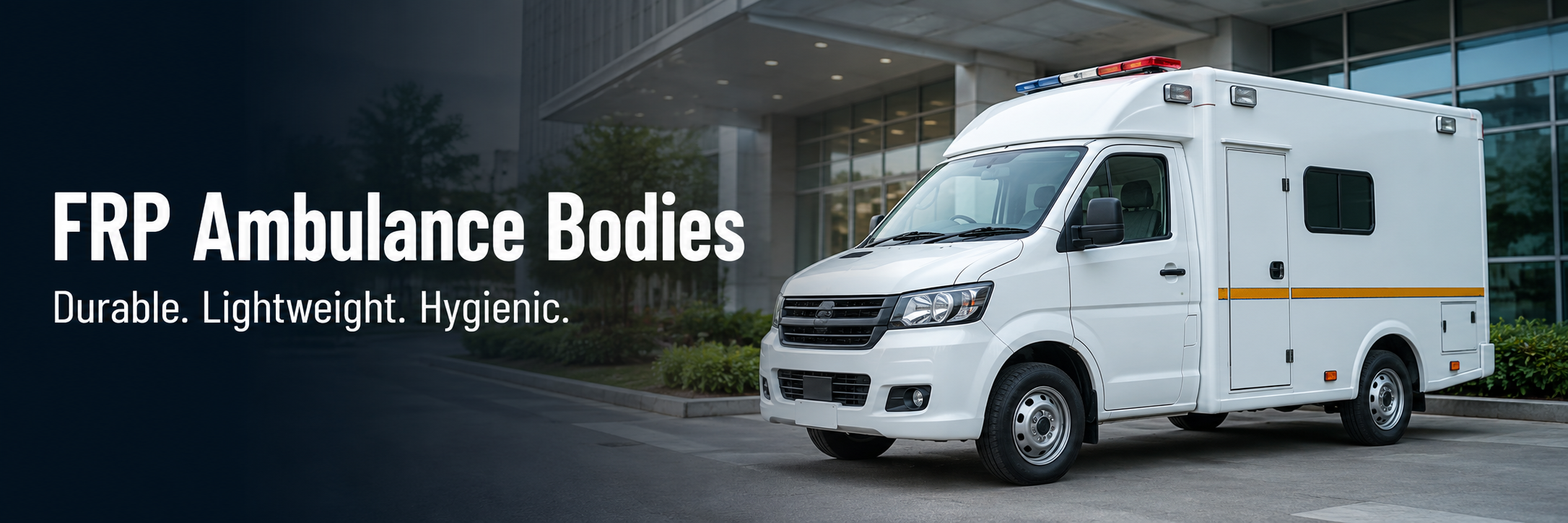
FRP, or Fiber Reinforced Plastic, is a composite material made from polymer resin strengthened with fibers such as glass. It is widely used in ambulance body construction because it is lightweight, corrosion resistant, and easy to clean. FRP bodies improve durability, hygiene, fuel efficiency, and long term performance compared to traditional steel or aluminum builds.
Choosing the right material for an ambulance body is not a small decision. It affects how long the vehicle lasts, how much it costs to maintain, how safe it is for patients and medical crews, and how well it holds up to years of daily emergency use. Over the past two decades, Fiber Reinforced Plastic has become the preferred choice for ambulance manufacturers across India and many parts of the world.
This article explains what FRP is, how it is made, and why it has become the standard material for modern ambulance bodies. We will look at its properties, compare it against steel and aluminum, and cover the practical reasons hospitals, government health departments, and private fleet operators increasingly specify FRP for their emergency medical vehicles.
What Is FRP?
FRP is a composite material built from a plastic resin base that is reinforced with fine fibers, most commonly glass fibers. The fibers give the material its strength, while the resin holds everything together and gives the panel its shape.
Think of it like a sandwich. Layers of fiber cloth are soaked in liquid resin, stacked, and then cured under heat or pressure until they harden into a rigid, lightweight panel. The result is a material that behaves more like a purpose built composite than a raw metal sheet, and it can be engineered for specific strength, flexibility, and finish requirements.
What Does FRP Stand for?
FRP stands for Fiber Reinforced Plastic. It is also sometimes called Fibre Reinforced Polymer or GRP, short for Glass Reinforced Plastic, when glass fiber is the primary reinforcement used.
In the ambulance manufacturing industry, these terms are generally used interchangeably. The important thing to understand is that FRP is not a single raw material like steel or aluminum. It is a manufactured composite, which is exactly why it can be customized for the demanding conditions an ambulance body has to handle.
How Is FRP Manufactured?
FRP ambulance panels are typically manufactured using hand layup, spray layup, or vacuum infusion processes, depending on the manufacturer's equipment and the panel's intended use.
- Layers of glass fiber mat or woven cloth are placed into a mold shaped to the ambulance body panel.
- Liquid polymer resin, often polyester or vinyl ester, is applied to saturate the fiber layers.
- The panel is cured, either at room temperature or with controlled heat, until it hardens fully.
- The cured panel is removed from the mold, trimmed, and finished with a gel coat for a smooth exterior surface.
This process allows manufacturers to produce large, seamless, curved panels that are difficult or impossible to achieve with sheet metal, which is one reason FRP ambulance bodies often look sleeker and more streamlined than metal built ones.
Why Is FRP Used in Ambulance Body Construction?
FRP is used in ambulance body construction because it solves several problems that steel and aluminum bodies struggle with over years of hard use, including rust, weight, and hygiene.
Ambulances operate in demanding conditions. They are on the road in all weather, they carry heavy medical equipment, and they need to be cleaned and disinfected frequently, sometimes multiple times a day. A material that resists corrosion, sheds weight, and cleans easily directly supports the vehicle's core job of getting patients to care quickly and safely.
Manufacturers building to the Automotive Industry Standard AIS-125 in India, which governs ambulance body layout and construction, increasingly specify FRP for the body shell because it helps meet durability and hygiene expectations without adding unnecessary weight to the chassis.
Properties of FRP
FRP brings together a combination of properties that are difficult to find in a single traditional material.
- High strength to weight ratio, meaning it is strong without being heavy.
- Corrosion and rust resistance, since it contains no exposed metal surface to oxidize.
- Low moisture absorption when properly manufactured and sealed.
- Good impact resistance, which helps the body withstand minor collisions and road debris.
- Smooth, non porous surface finish that resists staining and is easy to disinfect.
- Design flexibility, allowing curved and molded panel shapes.
- Availability in fire retardant grades for added safety compliance.
Benefits of FRP Ambulance Bodies
The practical benefits of FRP show up across the entire life of the vehicle, from the day it enters service to years later when it is still on the road.
- Lower overall vehicle weight, which supports better fuel efficiency.
- Reduced corrosion related repairs compared to steel bodies.
- Easier and faster disinfection due to fewer seams and joints.
- Longer service life with proper maintenance.
- Lower long term maintenance costs despite a higher initial material cost in some cases.
- Better resistance to dents from minor impacts compared to thin gauge steel.
Table 1: Comparison of Ambulance Body Materials
| Material | Weight | Durability | Corrosion Resistance | Maintenance |
|---|---|---|---|---|
| FRP | Light | High | Excellent | Low |
| Steel | Heavy | High | Poor to Moderate | High |
| Aluminum | Light to Moderate | Moderate | Good | Moderate |
What Are the Benefits of FRP Compared to Steel and Aluminum?
FRP generally outperforms steel on weight and corrosion resistance, and it holds up better than aluminum against dents and long term fatigue, while both alternatives bring their own trade offs.
FRP vs Steel Ambulance Bodies
Steel has long been used in vehicle body construction because of its strength and affordability. However, steel is prone to rust, especially in humid climates or coastal regions, and it adds significant weight to the vehicle.
FRP eliminates the rust problem entirely, since there is no exposed metal to corrode. It also weighs considerably less than steel of comparable strength, which reduces strain on the chassis and engine over time.
FRP vs Aluminum Ambulance Bodies
Aluminum is lighter than steel and resists corrosion better, which is why it has also been used in ambulance construction. But aluminum is softer and can dent more easily on impact, and repairing dented aluminum panels often requires specialized equipment.
FRP panels can be engineered to resist dents better than aluminum in many cases, and minor surface damage can often be repaired with resurfacing techniques rather than full panel replacement.
Table 2: Benefits of FRP
| Feature | Benefit | Impact on Ambulance Performance |
|---|---|---|
| Lightweight composite structure | Reduces overall vehicle weight | Improves fuel efficiency and payload capacity |
| Corrosion resistant material | No rusting over time | Longer body life and fewer repairs |
| Smooth, seamless panels | Easier to clean and disinfect | Supports better infection control |
| Moldable design | Custom shapes and streamlined finish | Better aerodynamics and appearance |
| Fire retardant grades available | Improved fire safety compliance | Meets regulatory and safety expectations |
How Does FRP Improve Ambulance Safety?
FRP improves ambulance safety by offering good impact absorption, fire retardant options, and a structurally stable body that holds its shape under stress.
Emergency vehicles need to protect both the patient and the medical crew inside during transit, which often happens at higher speeds and under time pressure. FRP panels, when engineered correctly and combined with a reinforced chassis frame, contribute to a body structure that can absorb impact energy without shattering or splintering in dangerous ways.
Fire retardant FRP grades are also available, which is an important safety consideration given that ambulances carry oxygen cylinders and electrical medical equipment. Many manufacturers now build to these fire safety specifications as part of their standard ambulance body construction process, in line with expectations set out under AIS-125 for ambulance vehicles in India.
Why Is FRP Better for Infection Control?
FRP is better for infection control because its smooth, non porous surface has fewer seams and joints where bacteria, moisture, and debris can accumulate compared to riveted metal panels.
Ambulances are essentially mobile treatment spaces. Blood, bodily fluids, and other biohazard materials are a regular part of emergency response work, which makes surface hygiene a genuine clinical concern, not just a cosmetic one. Steel bodies typically rely on welded or riveted joints, which can develop tiny gaps over time where fluids and dirt collect and become difficult to fully clean.
FRP panels can be molded as large, continuous surfaces with minimal joints, and their gel coated finish is resistant to staining. This supports faster and more thorough disinfection between patient transports, which is a priority for hospitals and Emergency Medical Services operators managing infection control protocols across their fleets.
How Long Does an FRP Ambulance Body Last?
A properly manufactured FRP ambulance body typically lasts 10 to 15 years or longer with routine maintenance, outlasting many steel bodies that develop corrosion related structural issues well before that point.
Actual lifespan depends on build quality, resin composition, climate conditions, and how well the vehicle is maintained. Fleet operators who follow manufacturer guidelines for cleaning, minor repair, and periodic inspection generally see FRP bodies remain structurally sound for the full service life of the vehicle, well beyond the point where a comparable steel body would need major corrosion repair or replacement.
Role of FRP in Lightweight Ambulance Design
Lightweight design has become a priority across the automotive industry, and ambulance manufacturing is no exception. A lighter vehicle body means less strain on the engine, better handling, and improved braking performance, all of which matter when every second counts during an emergency transport.
FRP allows manufacturers to build a body that is significantly lighter than an equivalent steel structure without sacrificing the structural integrity needed to house medical equipment, stretcher systems, and life support devices securely during transit.
Impact on Fuel Efficiency and Fleet Costs
Because FRP reduces overall vehicle weight, ambulances built with FRP bodies generally require less fuel to operate compared to heavier steel bodied equivalents, which can lead to meaningful savings across a large fleet over time.
For hospital networks, government health departments, and private ambulance operators managing dozens or hundreds of vehicles, even a modest per vehicle fuel saving adds up significantly at the fleet level. Lower maintenance costs from reduced corrosion issues further support the overall economics of choosing FRP for fleet vehicles.
Table 3: Lifecycle Cost Comparison
| Factor | FRP | Steel | Aluminum |
|---|---|---|---|
| Initial Cost | Moderate to High | Low to Moderate | High |
| Maintenance Cost | Low | High | Moderate |
| Lifespan | Long | Moderate | Moderate to Long |
| Fuel Efficiency Impact | Positive | Negative | Positive |
| Overall Value | High | Moderate | Moderate to High |
Applications of FRP Beyond Ambulances
FRP is not limited to ambulance bodies. The same properties that make it useful in emergency medical vehicles have made it a popular choice across other sectors as well.
- Bus and truck body panels in the commercial automotive industry.
- Boat hulls and marine equipment, where corrosion resistance is essential.
- Water tanks and storage vessels in industrial and residential use.
- Building panels and roofing sheets in construction.
- Mobile clinics, blood donation vans, and other specialized healthcare vehicles.
This broad use across industries reflects how well established and well tested FRP is as an engineering material, rather than being a niche or unproven choice for ambulance manufacturing.
Manufacturing Standards and Quality Considerations
Ambulance manufacturers in India build to the AIS-125 Automotive Industry Standard, developed with input from the Automotive Research Association of India, which sets requirements for ambulance body layout, equipment placement, and construction quality.
Quality FRP manufacturing depends on several factors that buyers and fleet managers should be aware of.
- Correct fiber to resin ratio to ensure structural strength.
- Proper curing time and conditions to avoid weak or brittle panels.
- Use of fire retardant resin grades where required.
- Quality gel coating for surface finish and UV resistance.
- Consistent quality control checks across production batches.
Buyers working with hospitals, state health departments, or private fleet operators should ask manufacturers about their compliance with these standards and their internal quality control processes before finalizing an order.
Challenges and Limitations of FRP
FRP is not without its limitations, and it is worth understanding these honestly rather than presenting the material as flawless.
- Initial material and tooling costs can be higher than basic steel construction.
- Quality depends heavily on manufacturing process control, so panels from a poorly managed production line can underperform.
- Repair of significant structural damage requires trained technicians familiar with composite repair techniques, which are not as widely available as traditional metal body repair services in every region.
- UV exposure over many years can affect surface finish if gel coating is not maintained.
These challenges are manageable with the right manufacturing partner and routine maintenance, but they are worth factoring into any purchasing decision.
How Do You Choose a Quality FRP Ambulance Manufacturer?
Choose an FRP ambulance manufacturer with proven AIS-125 compliance, a track record supplying government and private healthcare fleets, documented quality control processes, and reliable after sales repair support.
A few practical questions to ask before selecting a manufacturer include the following.
- Does the manufacturer have prior experience supplying to government health departments or established hospital networks?
- Can they demonstrate compliance with AIS-125 and other applicable ambulance manufacturing standards?
- What resin and fiber specifications do they use, and can they explain their quality control process?
- Do they offer fire retardant FRP options where required?
- What after sales support is available for repairs, spare panels, and maintenance guidance?
Taking the time to evaluate these factors helps fleet managers and healthcare institutions avoid costly issues down the line and ensures the vehicle performs reliably throughout its service life.
Future of FRP in Emergency Medical Vehicles
As India's healthcare infrastructure continues to expand and Emergency Medical Services networks grow in both urban and rural areas, demand for durable, low maintenance ambulance bodies is expected to grow alongside it.
Newer composite formulations, including hybrid fiber blends and improved resin systems, are being developed to further improve strength, reduce weight, and enhance fire safety performance. Sustainable manufacturing practices, including recyclable resin systems, are also gaining attention as the industry looks to reduce its environmental footprint. FRP is well positioned to remain a leading material choice as ambulance manufacturing standards continue to evolve.
Expert Insights
Automotive engineers working in composite manufacturing generally agree that the shift toward FRP in ambulance construction reflects a broader trend across the vehicle body industry, where weight reduction and corrosion resistance are increasingly prioritized alongside traditional measures of strength.
Fleet managers overseeing large ambulance networks often point to reduced downtime from corrosion related repairs as one of the most tangible operational benefits, since fewer vehicles off the road for repair translates directly into better emergency response coverage for the population they serve.
Conclusion - FRP
FRP has earned its place as a leading material for ambulance body construction because it addresses the practical challenges that steel and aluminum struggle with over years of hard use. It is lightweight, corrosion resistant, easy to clean, and capable of being molded into durable, streamlined body panels that support both patient safety and fleet economics.
For hospitals, government health departments, and private ambulance operators evaluating their next fleet purchase, understanding these material differences is a meaningful step toward making a decision that supports reliable emergency care for years to come.
Related Industry Resources
- Ambulance Manufacturing Process
- AIS-125 Ambulance Standards Explained
- Types of Ambulances in India
- Emergency Medical Services in India
- Healthcare Mobility Solutions
- Medical Vehicle Safety Standards
- Future of Ambulance Manufacturing
- Composite Materials in Automotive Industry
- Fleet Management Best Practices
- Healthcare Infrastructure in India
FAQ
Question: What does FRP stand for in ambulance manufacturing?
Answer: FRP stands for Fiber Reinforced Plastic. It is a composite material made by combining a polymer resin with reinforcing fibers such as glass, and it is widely used to build ambulance bodies because of its strength, light weight, and resistance to rust.
Question: Why is FRP better than steel for ambulance bodies?
Answer: FRP does not rust or corrode like steel, it weighs significantly less, and it can be molded into smooth, seamless panels that are easier to clean. This makes FRP ambulances lighter, more hygienic, and cheaper to maintain over their service life.
Question: Is FRP stronger than aluminum for ambulance construction?
Answer: FRP offers a better strength to weight ratio than aluminum in many applications and does not suffer from the same fatigue or denting issues. Aluminum is lighter in raw form, but FRP panels can be engineered for similar or better structural performance with added corrosion resistance.
Question: How long does an FRP ambulance body last?
Answer: A well manufactured FRP ambulance body typically lasts 10 to 15 years or more with proper maintenance, since the material resists corrosion, moisture damage, and structural fatigue better than traditional metal bodies.
Question: Does FRP help with infection control in ambulances?
Answer: Yes. FRP panels have a smooth, non porous surface with minimal seams, which makes them easier to disinfect thoroughly compared to riveted metal panels that can trap moisture, dirt, and pathogens in joints and crevices.
Question: Is FRP fire safe for ambulance manufacturing?
Answer: Fire retardant grades of FRP are available and commonly used in ambulance body construction to meet safety requirements, offering resistance to flame spread while maintaining the material's structural and weight advantages.
Question: What is the AIS-125 standard and how does it relate to FRP ambulances?
Answer: AIS-125 is the Automotive Industry Standard issued by the Automotive Research Association of India that governs ambulance body construction, layout, and safety requirements in India. FRP ambulance bodies are manufactured to comply with these specifications.
Question: Does an FRP body improve fuel efficiency?
Answer: Yes. Because FRP is significantly lighter than steel, ambulances built with FRP bodies place less load on the engine, which can improve fuel efficiency and reduce running costs across a fleet.
Question: Can FRP ambulance panels be repaired if damaged?
Answer: Minor damage to FRP panels can usually be repaired through patching and resurfacing techniques without needing to replace the entire panel, which helps keep maintenance costs manageable over the vehicle's lifespan.
Question: How do I choose a reliable FRP ambulance manufacturer?
Answer: Look for a manufacturer with experience in AIS-125 compliant builds, a track record of supplying government and private healthcare fleets, quality control processes for resin and fiber composition, and after sales support for repairs and maintenance.