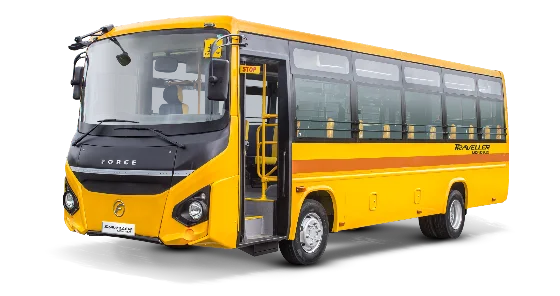


Bus Body Fabrication in India: What You Need to Know Before Ordering
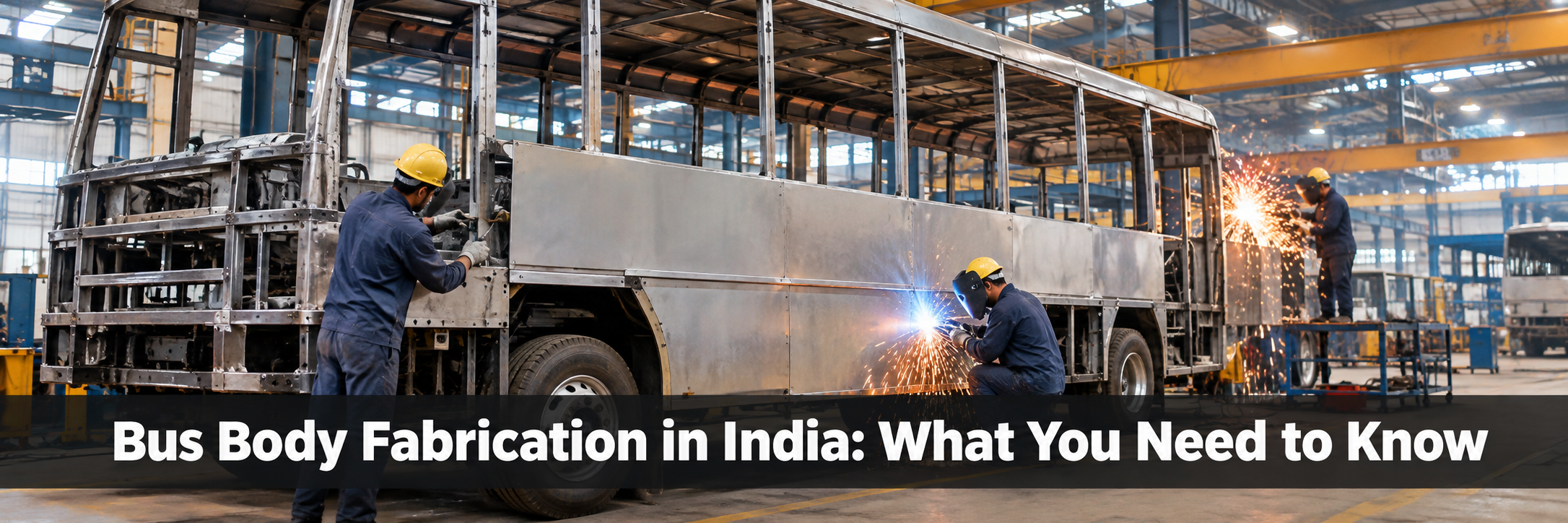
Quick Answer: Bus body fabrication is the process of building a passenger body on a bare chassis, covering structure, materials, seating, safety and electrical systems. Before ordering, buyers should check chassis compatibility, design, materials, safety features, seating plan, regulatory compliance, fabrication quality, documentation and after-sales support.
Ordering a bus body is not the same as buying an off-the-shelf vehicle. A fleet operator, institution or business usually starts with a bare chassis and works with a body builder to design and construct the passenger compartment around it. This process shapes how safe, comfortable and durable the finished vehicle will be for years of daily operation.
For anyone in India involved in public transport, school transportation, employee transport, tourism or intercity travel, understanding how bus body fabrication works can prevent costly mistakes. This guide walks through the practical questions a buyer should ask before signing off on an order, from chassis compatibility to final documentation.
What Is Bus Body Fabrication?
Bus body fabrication is the process of constructing the passenger-carrying structure on a bus chassis, including the frame, exterior panels, flooring, roof, windows, doors, seating and interior fittings.
A bus chassis, as supplied by a vehicle manufacturer, is essentially a rolling platform with an engine or power source, wheels, suspension, steering and braking systems, but without a passenger body. The body builder's role is to design and fabricate a structure suited to the intended use, whether that is a city bus, school bus, staff transport vehicle or tourist coach.
This is a common practice across the commercial vehicle industry in India, where chassis manufacturers and body builders often operate as separate entities working within the chassis manufacturer's guidelines.
How Does Bus Body Fabrication Work in India?
In India, bus body fabrication generally involves a body builder receiving an approved chassis, then engineering and constructing the body according to the buyer's requirements and the chassis manufacturer's body-building guidelines.
The bus manufacturing industry in India includes a mix of large integrated manufacturers and independent body building workshops. Buyers may either purchase a chassis directly from a vehicle manufacturer and then contract a separate fabricator, or work with a manufacturer who offers both chassis and body as part of one package.
Throughout this process, the Ministry of Road Transport and Highways and state transport authorities play a role in setting the framework within which vehicles must be registered and operated. Buyers are encouraged to verify current requirements directly with these authorities, since rules can differ by vehicle category, seating capacity and state.
What Are the Main Types of Bus Bodies?
Bus bodies are generally categorised by their intended application rather than by a single universal design. The appropriate body depends on chassis type, passenger capacity, operating environment and use case.
- Standard passenger bus for general route operations
- City bus designed for frequent stops and standing passengers
- School bus with layout suited to student transport
- Staff or employee transport bus for corporate use
- Tourist bus and luxury coach for longer journeys
- Sleeper bus for overnight intercity travel
- Mini bus for lower-capacity routes
- Electric bus built around a battery-electric or alternative powertrain chassis
- Accessible bus with provisions for passengers with reduced mobility
- Special-purpose bus for institutional or industrial use
What Should You Check Before Ordering a Bus Body?
Before placing an order, buyers should confirm chassis compatibility, body dimensions, materials, safety provisions, seating layout, electrical systems, documentation and after-sales support.
Many disputes between buyers and fabricators arise from assumptions that were never written down. A detailed specification sheet, agreed upon before production starts, helps both sides stay aligned on what is being built and reduces the chance of costly rework later.
How Important Is Chassis Compatibility?
Chassis compatibility is critical because the body must match the chassis manufacturer's wheelbase, weight ratings, mounting points and body-building guidelines to maintain safe handling and structural integrity.
A bus body should never be designed purely based on how it looks or on dimensions taken casually from a similar vehicle. Several technical factors need to align:
- Chassis manufacturer specifications and wheelbase
- Gross Vehicle Weight and axle load capacity
- Weight distribution once the body, seats and passengers are loaded
- Body mounting points and centre of gravity
- Ground clearance and turning radius requirements
- Suspension, braking and steering behaviour under load
- Electrical architecture and fuel or battery system layout
Ignoring these factors can affect vehicle stability, braking performance and long-term durability. This is why reputable fabricators work within the chassis manufacturer's published body-building guidelines rather than treating the chassis as a blank platform.
Which Materials Are Used in Bus Body Fabrication?
Common materials include mild steel, stainless steel, aluminium, galvanised steel, and composite or FRP panels, each offering a different balance of strength, weight, cost and corrosion resistance.
No single material is universally superior. The right choice depends on budget, application, expected service life and maintenance capability.
| Material | Key Advantage | Consideration | Typical Use |
|---|---|---|---|
| Mild Steel | Strong, widely available, cost-effective | Prone to corrosion without proper protection | Structural frames, general bodies |
| Stainless Steel | Good corrosion resistance | Higher material and fabrication cost | High-durability panels, humid regions |
| Aluminium | Lightweight, aids fuel or energy efficiency | Higher cost, different welding requirements | Panels on weight-sensitive applications |
| Galvanised Steel | Improved corrosion protection over mild steel | Coating can be affected by certain repairs | Structural members, floor supports |
| FRP or Composite Panels | Lightweight, moulded shapes possible | Repair process differs from metal panels | Exterior body panels, roof sections |
Buyers should also consider flooring materials, insulation, laminated interior panels and safety glazing, since these affect passenger comfort, noise levels and long-term maintenance.
What Are the Key Structural Components of a Bus Body?
The main structural components include the frame, flooring, roof, side panels, windows, doors and emergency exits, all of which contribute to overall structural strength and passenger safety.
- Frame and structural members forming the load-bearing skeleton
- Flooring system, often reinforced for weight distribution
- Roofing structure, which also houses HVAC and lighting components
- Side panels providing weather protection and structural rigidity
- Windows and safety glazing
- Passenger doors and door mechanisms
- Emergency exits and signage
These elements need to work together as a system. A strong frame with poorly integrated flooring, for example, can still result in premature wear or safety concerns.
What Safety Features Should You Check?
Safety features to check include emergency exits, safety glass, seat anchorage, handrails, anti-slip flooring and adequate lighting, while noting that exact requirements can vary by bus category and application.
It is important to distinguish between three categories:
- Regulatory requirements: provisions mandated for specific vehicle categories under applicable rules, which buyers should verify with the Ministry of Road Transport and Highways or the relevant state transport authority.
- Industry best practices: features widely adopted across the bus body building industry even where not strictly mandated, such as additional handrails or improved lighting.
- Optional features: add-ons chosen by the buyer for comfort or operational convenience, such as extra CCTV coverage or upgraded seating.
Not every feature applies to every bus. Requirements can differ based on seating capacity, vehicle class, application and state-specific rules, so buyers should confirm applicable provisions before finalising a design.
How Should Seating and Passenger Comfort Be Planned?
Seating and comfort planning should balance passenger capacity with seat pitch, aisle width, legroom, ventilation and accessibility, based on the bus's intended operating profile.
A city bus prioritising standing capacity will have a very different seating plan compared with an intercity coach designed for long journeys. Key factors include:
- Seating capacity versus standing capacity, where applicable
- Seat pitch, seat width and legroom
- Aisle width for movement and boarding speed
- Seat material and anchorage strength
- Grab rails and interior headroom
- Ventilation, air conditioning or heating as relevant
- Luggage storage requirements
- Accessibility provisions for passengers with reduced mobility
Overloading a design with too many seats to maximise capacity can reduce comfort and legroom, so buyers should weigh operational goals against passenger experience.
What Electrical and Technology Features Can Be Added?
Modern bus bodies can include LED lighting, passenger information systems, CCTV, GPS tracking, public address systems and USB charging, though each addition affects cost, weight and electrical load.
Technology adoption in the bus body building industry has grown alongside fleet telematics and digital passenger information systems. Common additions include:
- LED interior and exterior lighting
- Destination display boards
- Passenger information and announcement systems
- CCTV and reverse camera systems
- GPS tracking and fleet monitoring or telematics systems
- Public address systems and USB charging points
- Parking sensors and, in some cases, Wi-Fi connectivity
Buyers should discuss how additional electrical equipment will be integrated with the chassis manufacturer's electrical architecture, since poorly planned wiring can create maintenance issues later.
How Does Bus Body Fabrication Affect Vehicle Weight?
Body weight directly affects payload capacity, fuel or energy efficiency, braking performance and overall vehicle stability, making it an important factor from the earliest design stage.
Every material choice, seat, panel and piece of equipment adds to the total weight of the vehicle. Buyers should ask fabricators to account for:
- Estimated unladen body weight
- Weight distribution across front and rear axles
- Compliance with the chassis manufacturer's Gross Vehicle Weight rating
- Impact of added equipment such as HVAC units or battery packs
Weight should be considered early in the design process rather than discovered only after fabrication, since retrofitting a body to reduce weight is far more difficult than planning for it upfront.
How Much Does Bus Body Fabrication Cost in India?
Bus body fabrication cost in India varies significantly depending on bus size, chassis, materials, seating capacity and equipment, so buyers should treat any figure as indicative rather than fixed.
There is no single standard price across the Indian market, because specifications differ so widely between a basic staff transport bus and a fully equipped luxury coach. Instead of relying on a fixed number, buyers should request a written quotation based on their exact specification, and compare quotations on the basis of what is included rather than price alone.
What Factors Affect Bus Body Fabrication Cost?
Cost is influenced by chassis type, body size, material choice, seating configuration, HVAC, electrical systems, interior finish, safety equipment and the level of customisation requested.
| Cost Factor | Impact on Price |
|---|---|
| Chassis Type and Size | Determines base platform cost and body dimensions |
| Body Size and Length | Larger bodies require more material and labour |
| Material Selection | Aluminium and composites typically cost more than mild steel |
| Seating Capacity and Layout | Custom layouts and premium seats increase cost |
| HVAC System | Air conditioning adds equipment and installation cost |
| Electrical and Technology Features | Each system adds hardware, wiring and integration cost |
| Interior Finish Quality | Premium finishes raise material and labour cost |
| Safety Equipment | Additional safety provisions add to overall cost |
| Customisation Level | Highly custom designs cost more than standardised builds |
| Production Volume | Larger orders can sometimes improve per-unit economics |
How Do You Choose the Right Bus Body Fabricator?
Choosing a fabricator involves evaluating their experience with the specific chassis, their engineering and quality control process, compliance awareness and after-sales support, rather than price alone.
Some practical questions to ask a prospective fabricator include:
- Do they have documented experience building on this particular chassis?
- Can they explain their quality control and inspection process?
- Do they provide detailed engineering drawings before production?
- What warranty and after-sales support do they offer?
- Can they share references from similar past projects?
Comparing quotations purely on price, without checking what is included, is one of the most common ways buyers end up with a vehicle that does not meet their actual requirements.
What Quality Checks Should Be Done Before Delivery?
Quality checks should cover structural inspection, welding quality, body alignment, door and window operation, electrical wiring, seat anchorage, paint quality and water leakage testing before the vehicle is accepted.
- Incoming material and dimensional inspection
- Structural and welding quality checks
- Body alignment and panel fitment
- Door and window operation testing
- Flooring and electrical wiring inspection
- Seat anchorage and lighting checks
- Paint quality and corrosion protection review
- Water leakage and, where appropriate, road testing
Thorough quality control at each stage directly affects long-term safety, passenger comfort and maintenance costs, so buyers are encouraged to request inspection reports as part of the delivery process.
What Documents Should You Check Before Taking Delivery?
Before taking delivery, buyers should check design specifications, material certificates, weight and dimension records, inspection reports and documentation required for vehicle registration.
Documentation matters because it provides a verifiable record of what was actually built, which becomes important for registration, insurance, warranty claims and future maintenance. Buyers should confirm registration and compliance documentation requirements directly with their state transport authority, since these can vary by vehicle category and location.
What Are Common Mistakes Buyers Make?
Common mistakes include choosing a fabricator based only on appearance or price, ignoring chassis specifications, not clearly defining passenger capacity, and skipping inspection before delivery.
- Selecting a design based only on appearance rather than function
- Ignoring chassis manufacturer specifications
- Not clearly defining passenger capacity in advance
- Failing to discuss expected vehicle weight
- Adding too many optional features without considering weight or cost impact
- Not confirming safety provisions in writing
- Skipping material specification checks
- Not documenting the final agreed design
- Not inspecting the body before delivery
- Overlooking after-sales support and spare parts availability
- Not verifying applicable regulations before ordering
- Comparing quotations only on price rather than scope of work
How Does Bus Body Fabrication Differ for Different Applications?
School Bus
School bus bodies are generally designed with student safety and supervision in mind, including layout considerations suited to younger passengers and clear emergency exit access.
Staff and Employee Transport Bus
Staff transport buses typically prioritise comfortable seating for daily commutes, along with reliable HVAC and straightforward maintenance for high-frequency use.
City Bus
City buses are usually configured for frequent stops, faster boarding and a mix of seating and standing capacity to handle high passenger turnover.
Intercity Bus
Intercity buses are built for longer routes, often with more comfortable seating, luggage storage and a focus on ride comfort over extended distances.
Tourist Bus
Tourist buses often include additional passenger comfort features, such as improved seating and audio-visual systems, suited to leisure travel.
Luxury Bus
Luxury coaches typically use higher-grade interior finishes, premium seating and enhanced HVAC, reflecting a focus on passenger experience.
Electric Bus
Electric bus bodies require close coordination with battery placement, weight distribution and high-voltage safety considerations from the earliest design stage.
| Bus Type | Typical Application | Important Considerations |
|---|---|---|
| City Bus | Urban public transport | High standing capacity, frequent stops, durability |
| School Bus | Student transportation | Safety layout, supervision, emergency exits |
| Staff Bus | Corporate employee transport | Comfortable seating, reliable HVAC, daily use durability |
| Tourist Bus | Leisure and group travel | Comfort features, luggage space, visibility |
| Intercity Bus | Long-distance routes | Seating comfort, luggage storage, ride quality |
| Luxury Coach | Premium travel | High-grade interior finish, advanced comfort features |
| Electric Bus | Sustainable urban or intercity transport | Battery placement, weight distribution, high-voltage safety |
What Role Does Bus Body Fabrication Play in Fleet Management?
Body design directly influences maintenance frequency, repair costs, downtime, fuel or energy efficiency and total cost of ownership across a bus's operating life.
Fleet operators benefit from thinking beyond the initial fabrication cost. Factors that affect long-term fleet management include:
- Ease of cleaning and component replacement
- Standardisation across the fleet for simpler maintenance
- Impact of body weight on fuel or energy efficiency
- Driver visibility and safety systems
- Resale value influenced by build quality and documentation
A vehicle that looks good on delivery but requires frequent repairs can end up costing more over its lifecycle than a well-specified, slightly more expensive build.
What Are the Relevant Government Standards and Regulations?
Bus body fabrication in India operates within a framework that includes the Central Motor Vehicles Rules, guidelines from the Ministry of Road Transport and Highways, and vehicle type approval processes involving testing agencies such as the Automotive Research Association of India.
Requirements can vary depending on vehicle category, seating capacity, application and state-specific rules. Buyers and fabricators should not assume that a single standard applies universally, and should verify current requirements directly with the relevant authority or testing agency before finalising production. Chassis manufacturers also typically publish body-building guidelines that fabricators are expected to follow to maintain compliance and warranty coverage.
Why Is Preventive Maintenance Important After Fabrication?
Preventive maintenance helps identify wear, corrosion or mechanical issues early, reducing unplanned downtime and extending the operational life of the bus body.
A well-fabricated body still requires ongoing attention, including periodic checks of structural joints, corrosion-prone areas, electrical systems, door mechanisms and safety equipment. Establishing a maintenance schedule from day one supports both passenger safety and long-term cost control.
Future of Bus Body Fabrication in India
The bus body building industry in India is gradually moving toward lightweight materials, electric mobility, connected vehicle systems and more standardised fleet platforms.
- Growing adoption of electric buses and associated body design changes
- Increased use of lightweight materials to improve efficiency
- Wider integration of connected and telematics-enabled systems
- Greater focus on accessible public transportation
- Expansion of modular body designs for faster, more consistent production
- Continued improvement in corrosion protection and durability
- Broader use of computer-aided design and digital engineering tools
These developments are likely to shape how bus bodies are designed and manufactured in the coming years, though the pace of adoption will vary across manufacturers and regions.
Expert Insights
Feedback from fleet operators, automotive engineers and fabrication teams consistently points to a few practical themes:
- A well-defined specification sheet reduces disputes between buyer and fabricator.
- Vehicle weight should be considered from the earliest design stage, not after fabrication.
- Chassis and body integration is critical to safety and stability.
- Safety provisions should not be treated as optional upgrades.
- Clear documentation helps maintain quality standards throughout production.
- Standardisation across a fleet can simplify long-term maintenance.
- Inspection before delivery helps identify issues before the vehicle enters service.
Conclusion - Bus Body Fabrication in India
Ordering a bus body is a technical and commercial decision that goes well beyond selecting a design that looks appealing. Chassis compatibility, materials, safety provisions, seating design, electrical systems, documentation and after-sales support all play a role in how the finished vehicle performs over its operating life.
Buyers who take the time to define a clear specification, verify applicable regulations with the relevant authorities, and inspect the vehicle before delivery are better positioned to avoid costly surprises. As India's bus manufacturing and bus body building industry continues to evolve alongside electric mobility and new technology, informed procurement decisions will remain central to safe, reliable and cost-effective fleet operations.
FAQ
Question: What is bus body fabrication?
Answer: Bus body fabrication is the process of designing and building the passenger body structure, including the frame, panels, flooring, seating, doors and interior fittings, on top of a bare bus chassis supplied by a vehicle manufacturer.
Question: How is a bus body fabricated in India?
Answer: In India, a bus body is typically built by a specialised body builder who receives an approved chassis, then fabricates the structure, installs panels, flooring, seating, electrical systems and safety features according to the intended application and applicable guidelines.
Question: How much does bus body fabrication cost in India?
Answer: Cost varies widely based on bus size, chassis type, materials, seating capacity, HVAC, electrical fittings and finish level. Buyers should treat any figure as indicative and request a current quotation based on exact specifications.
Question: Which materials are used for bus body fabrication?
Answer: Common materials include mild steel, stainless steel, aluminium, galvanised steel, FRP and other composite panels, each offering different combinations of strength, weight, corrosion resistance and cost.
Question: How do I choose a bus body fabricator?
Answer: Evaluate a fabricator's experience with your chassis type, their engineering and quality control process, compliance awareness, after-sales support, and willingness to document specifications clearly before production begins.
Question: What should I check before ordering a bus body?
Answer: Confirm chassis compatibility, body dimensions, seating layout, materials, safety features, electrical load, warranty terms, documentation and delivery timelines before finalising an order.
Question: Is bus body fabrication possible on any chassis?
Answer: No. A body must be designed to match the specific chassis manufacturer's wheelbase, load ratings and body-building guidelines. Fabricating without following these specifications can affect safety and vehicle performance.
Question: What safety features should a bus body have?
Answer: Depending on the application and category, considerations include emergency exits, safety glass, secure seat anchorage, handrails, anti-slip flooring and adequate lighting, alongside features required by applicable regulations.
Question: How long does bus body fabrication take?
Answer: Timelines depend on the complexity of the design, customisation level and fabricator workload. Buyers should ask for a realistic production schedule in writing rather than assuming a standard duration.
Question: What documents are required after bus body fabrication?
Answer: Buyers should typically expect design specifications, material certificates, weight and dimension records, inspection reports and documentation needed for registration, and should verify exact requirements with the relevant transport authority.